

RecRoomMasters
Arcade Cabinets for Schools: Esports and Campus Engagement
Oct
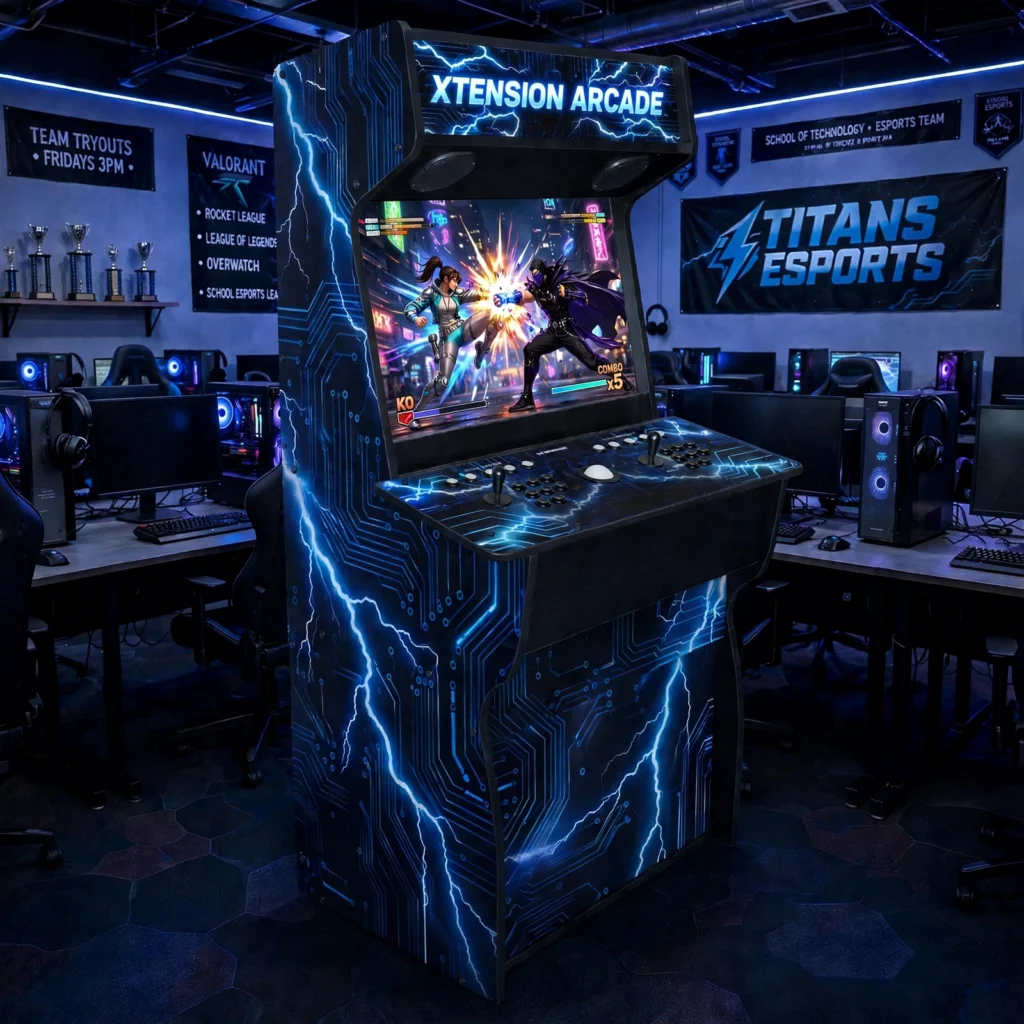
Esports is no longer a fringe club meeting in a spare classroom. In California, CIF has partnered with NASEF to run an official CIF-aligned esports initiative with varsity, JV, and exhibition divisions and in-person state finals. For K-12 and university leaders, that shift raises a practical question: how do you build campus infrastructure that supports competition, learning, and student belonging without overpromising what the evidence shows?
This analysis examines arcade cabinets as institutional purchases, not novelty furniture. It covers why esports belongs in budget talks, what engagement evidence actually shows, how to frame STEM claims responsibly, and what to specify for durability in shared use. It also walks through multi-unit procurement, bids, volume, assembly labor, maintenance, total cost of ownership, and a buyer checklist. By the end, administrators, IT directors, and esports coordinators will have a clear framework for deciding whether arcade cabinets are a sound investment and how to turn them into program infrastructure.
Why Esports Now Belongs in the School Budget Conversation
Scholastic esports has moved from fringe club to sanctioned activity. California’s CIF-NASEF esports initiative offers structured varsity, JV, and exhibition competition with in-person state finals, a signal that dedicated hardware belongs in program budgets. Programs that earn formal activity or competition status may gain access to existing budget lines for activities; confirm your district’s classification policy before drafting a funding request.
Most esports programs sit as electives or after-school activities, which places them in the extracurricular category rather than the classroom technology budget. Administrators should confirm which classification applies before drafting a funding request.
Scale supports multi-unit planning: NCES Common Core of Data covers roughly 100,000 public elementary and secondary schools and about 18,000 public school districts in the United States.
Canadian boards face the same question at the provincial level, where multi-school districts plan equipment purchases in bulk. Treat cabinets as esports-adjacent infrastructure: a permanent, identifiable home on campus rather than a rolling cart that disappears into a classroom.
What the Engagement Evidence Actually Shows
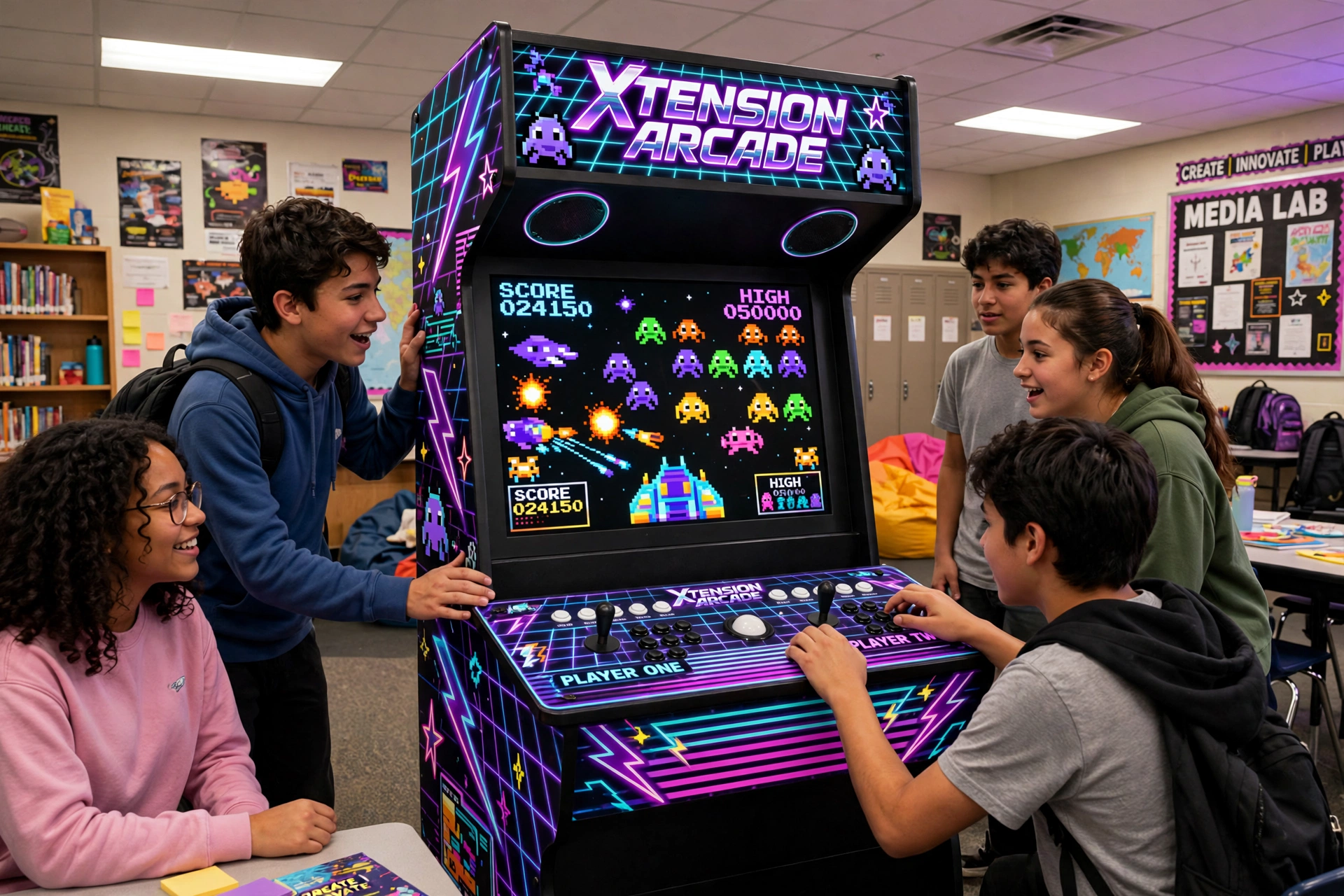
Recognition strengthens the budget case; it does not prove a cabinet changes outcomes. The most cited engagement figures come from an NCES 1995 issue brief using 1992 senior-cohort data: 50.4% of extracurricular participants had no unexcused absences versus 36.2% of nonparticipants, and 29.8% placed in the top quartile on a composite math and reading assessment versus 14.2%. The brief does not establish whether participation causes success, whether successful students self-select into activities, or both. The dataset is now more than 30 years old. It explains why schools fund activities historically, not what esports does today.
The same caution about causation appears in quarter-century participation research that reports similar correlations. Access also surfaces as an equity question in this literature: if participation correlates with outcomes, who gets to participate becomes a funding and facilities consideration.
For administrators, treat engagement as a local hypothesis. Track attendance, participation, and retention for your esports program against program cost. When evaluating vendors, ask for documentation showing hardware supports structured, supervised, repeatable use rather than casual drop-in play. That is what makes engagement measurable.
STEM and Curriculum Framing: Ask Before You Claim
Engagement evidence is local and correlational; curriculum claims need a different standard. No source in this research set shows that arcade cabinets produce STEM learning outcomes. Do not build a funding case on that claim.
Frame curriculum integration as an open question instead. A cabinet is a platform you can build lessons around, not a proven intervention. Worth evaluating with your curriculum team: hardware and input-device design, control mapping and electronics, basic coding of game logic, and the physics of game mechanics. An emulator-ready cabinet stocked with a broad game library becomes a testbed for those lessons rather than a finished teaching tool.
Esports management is itself a curriculum. Tournament operations, streaming production, sponsorship, budgeting, and communications map to existing career and technical education strands.
If your institution requires learning-outcome evidence, define the outcome first, then design a small pilot with a control group before scaling. Keep engagement and curriculum claims separate in internal documents; they have separate evidence requirements, and conflating them weakens both before a budget committee. Where the vendor can help is hardware specification: requesting documentation on cabinet components, control hardware, and repairability is a reasonable, verifiable request.
Durability for Shared Use: What to Specify
Once curriculum claims are separated from evidence, durability becomes the next specification. Institutional cabinets face abuse profiles home units never see: continuous multi-user sessions, dropped bags, unsupervised after-hours access, and controllers handled by dozens of students weekly. No independent testing or vandalism data for institutional cabinets appears in this research set. Voluntary durability standards exist for commercial furniture through BIFMA’s standards program, but none were confirmed for arcade cabinets. Treat durability as a specification to request, not an assumption.
Ask vendors for documented component specs: cabinet material and thickness, control panel construction, joystick and button type and brand, display rating, and service life for wear items. Ask what is user-serviceable. In a school, swapping a button or joystick in ten minutes without shipping the unit back beats a marginal spec advantage.
Compare dedicated cabinet controls against separate, replaceable controller units, since controllers fail first and cost least to replace. Rec Room Masters publishes component-level build detail on its DIY cabinet models; buyers can use that documentation to assess repairability before purchasing.
Decide whether the cabinet must be enclosed, lockable, or mobile. Locking matters in shared labs; mobility matters if the unit doubles as an event fixture. Request warranty terms in writing: coverage, exclusions, and turnaround time for replacement parts.
Buying Multiple Units: Procurement, Bids, and Volume
With specifications settled, procurement becomes the next hurdle.
Volume terms rarely appear on a retail page. Ask for written volume pricing tiers, education discounts, and a multi-unit quote; single-unit list pricing is not what districts pay.
Procurement rules vary by jurisdiction. Confirm with your procurement office before assuming a vendor can sell to you directly; purchasing authority sits under different statutes by state (North Carolina Procurement Manual). Many districts can buy through cooperative purchasing organizations or state contracts without a full competitive bid, so ask whether arcade gaming equipment can ride an existing contract vehicle.
If a formal RFQ or ITB is required, specify quantities, delivery timeline, assembly and installation expectations, warranty terms, and training or documentation requirements. Define the standard configuration in the RFQ itself, because bids built on different specifications cannot be compared on price.
Phased growth needs protection. If you plan to scale from four units to twenty across budget cycles, ask the vendor to hold pricing and specifications for a defined period so your first purchase does not become an orphan.
Budget accessories and spares in the same request, joysticks, buttons, and control panels ordered later cost more and arrive slower.
Assembly, Labor, and the Cost of Institutional Convenience
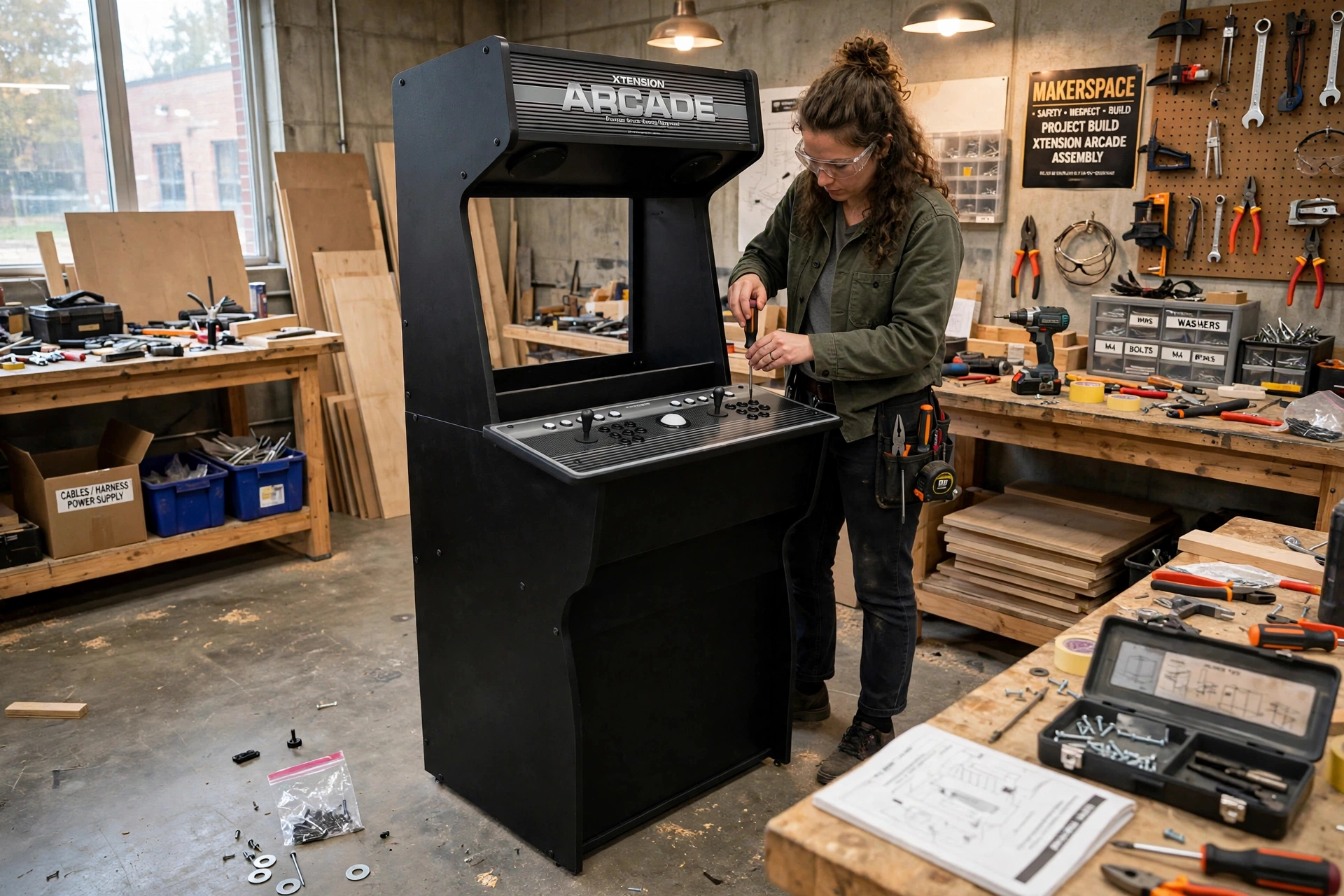
With volume pricing and bid terms settled, the next line in your true unit cost is assembly. Some institutional-grade cabinets ship as self-assembly kits while controllers arrive assembled; Rec Room Masters follows this model. That split shifts a real cost onto facilities or IT staff.
Self-assembly generally lowers unit price; whether it reduces shipping damage depends on packaging, so ask vendors about their freight damage rate. That calculation matters across ten or more units. Convert assembly time into dollars: estimate hours per unit, multiply by the loaded hourly rate of whoever does the work, then add the result to unit cost before comparing bids. For a loaded-rate reference, U.S. Bureau of Labor Statistics data show state and local government compensation at $66.45 per hour, with benefits at 38.8%.
Who assembles matters. Supervised student clubs or esports teams can build the cabinets, cutting staff labour cost and creating a hands-on project. Whether staff or students build, ask vendors for estimated build time per unit and documentation quality. A poorly documented kit costs more in staff time than it saves in unit price.
If in-house assembly is not feasible, ask about pre-assembled units or an assembly service, and price both against your own estimate.
Document assembly and any modifications for maintenance records; future repairs go faster when the original build configuration is on file. That record feeds your TCO model.
Maintenance and Total Cost of Ownership
Once assembly is complete, the real cost curve begins. Purchase price is the smallest part of the story. Build a five-year total cost of ownership model covering the cabinet, controls, displays, replacement parts, software, and staff time. No published TCO figures exist for institutional arcade cabinets, so build your own model and require vendors to supply the inputs.
Start with a bill of materials and a written parts availability commitment: how long will the vendor stock replacement components for the model you buy? Ask about software and content licensing, too. Some platforms carry ongoing subscription costs that materially change the five-year number and may require separate budget authority.
Model the failure rate you expect, not the one you hope for. In shared use, joysticks, buttons, and control panel wiring are predictable wear items, so plan spares accordingly; a solid arcade cabinet parts checklist helps you decide what to keep on hand. Compare in-house repair against vendor repair on total cost. Shipping a cabinet back for service is rarely economical for a school.
Finally, track everything: unit ID, purchase date, repair history, and parts replaced. That record strengthens your next budget request and your leverage in future negotiations.
An Institutional Buyer Checklist for Arcade Cabinets
With your total cost of ownership model in hand, convert it into written requirements. A vendor-neutral checklist lets you compare bids on equal terms rather than on sales presentations.
- Durability documentation. Request cabinet material and thickness, control panel construction, display specifications, and stated service life for wear components. Without documented figures, durability is a claim, not a specification.
- Control hardware. Confirm joystick and button type and brand, whether controls are user-replaceable, and whether replacement parts are stocked and shippable. Parts availability matters more than marginal spec gains in shared use.
- Multi-unit terms. Ask for volume pricing tiers, education discounts, delivery timelines, and whether the vendor will hold pricing and specifications across budget cycles. Quotes that expire in 30 days cannot support a multi-year rollout.
- Assembly expectations. Clarify kit versus assembled, documented build time per unit, and instruction quality. Rec Room Masters cabinets ship as self-assembly builds while its controllers ship fully assembled and ready to use, a split buyers should price against their own labour assumptions.
- Warranty and service. Obtain coverage terms, exclusions, turnaround time, and written confirmation that in-house repair is supported with parts and documentation.
- Licensing. Identify ongoing software, content, or subscription costs and calculate the five-year total before approval.
- Reference checks. Ask for institutional customers running multiple units in shared environments, then ask about failure rates and support responsiveness.
Turning Arcade Cabinets Into Program Infrastructure
California’s CIF-NASEF initiative gives esports a formal competitive structure alongside traditional activities. In states with formal esports activity recognition, cabinets may qualify for the same budget lines as athletic and activity equipment, confirm your jurisdiction’s classification.
Treat engagement and curriculum claims as hypotheses, not outcomes, and build your evidence through a structured pilot.
For a CIF-style program or any state with formal esports recognition, frame the hardware request as activity infrastructure. Start with a pilot, define success criteria in advance, and use documented results to justify scaling.
Conclusion
Arcade cabinets can become real program infrastructure for schools when esports is treated as sanctioned competition, not a novelty. Request a multi-unit quote, spec sheet, and procurement guide from your vendor, and ask specifically for documented assembly time, parts availability, and warranty terms.
Frequently Asked Questions
Are Xtension cabinets made in the USA?
The upright, sit-down, and pedestal lines — and all DIY versions — are manufactured in the USA. The Xtension 32″ Vertical and other lines aren’t, so check the product page for the specific line you’re buying.
Can our school buy several cabinets for an esports lab or student lounge?
Yes — that’s the institutional use case. The upright and pedestal cabinets fit multi-unit setups for labs and lounges; they ship as self-assembly kits with the controllers arriving pre-assembled. For multi-cabinet inquiries, use the Contact Us page.
What competitive leagues can students actually join?
California schools can register for the CIF Esports Initiative right now — registration for the 2026–27 season runs October 5 to December 18, 2026, the regular season starts January 18, 2027, and in-person State Finals are April 24, 2027. NASEF (North America Scholastic Esports Federation) is the initiative’s official esports provider, and CIF reports roughly 400 schools and 3,000 student-athletes competing in esports each year.
Do classrooms need special wiring or an arcade technician to set up?
No technician needed — the cabinets assemble in the room from a self-assembly kit. Check the product page for power requirements before ordering for a school building.
Do you ship to Canada?
Yes — Rec Room Masters ships to the USA and Canada.
