

RecRoomMasters
DIY Arcade Cabinet Kits: What Canadian Buyers Get (and Build) With an Xtension Machine
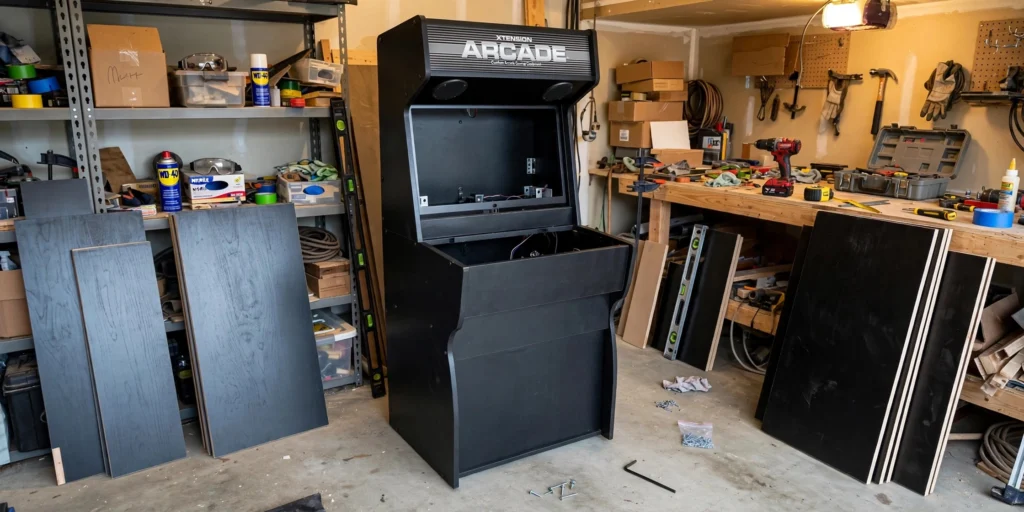
Sep
You’ve been dreaming about having your own arcade cabinet at home, and somewhere along the way you stumbled across the term “DIY arcade cabinet kit.” Now you’re wondering: what exactly does that mean? Is it a pile of raw lumber? A complicated engineering project? Something only a seasoned woodworker could pull off?
Good news. It’s none of those things.
A quality kit, like the ones made by Xtension, is a precision-cut flat-pack that arrives at your door ready to assemble. No sawing, no measuring, no guesswork. Most builders finish the whole thing in a single afternoon.
In this guide, we’re going to walk you through everything a Canadian buyer needs to know before placing an order. You’ll learn what “kit” actually means in plain terms, what shows up in the box, what the build experience genuinely looks like, and what you’ll need to source separately before you can start playing. We’ll also cover how ordering works from Canada and help you figure out which Xtension cabinet makes sense for your space and budget. By the end, you’ll be ready to buy with confidence.
What ‘Kit’ Actually Means (It’s Not What You’re Picturing)
When most people hear “kit,” they picture a box of unlabelled pieces, a confusing instruction sheet, and a weekend of quiet frustration. A DIY arcade cabinet kit is nothing like that.
A quality flat-pack kit arrives as precision-cut panels, pre-drilled holes, and clearly labelled components, every piece machined to fit exactly where it belongs. Think of it less like assembling furniture from scratch and more like clicking together something that genuinely wants to go together. The hard work happened at the CNC machine before anything shipped.
That distinction matters enormously, because not all kits are created equal. The Xtension lineup from Rec Room Masters is the clearest example of what a quality DIY arcade machine cabinet kit actually looks like in practice, and it’s the reference point this guide uses throughout.
Here’s the part worth reframing: self-assembly is a feature, not a shortcoming. A flat-pack kit gives you a customisable foundation. You choose your screen, your controls, your artwork, your layout. A pre-built cabinet locks all of that in for you. A kit hands you the decisions.
That said, set your expectations honestly. You are a builder here, not someone snapping together flat-pack shelving. There is real craft involved, and real satisfaction when the cabinet is standing in your game room because you put it there.
Precision-Cut and USA-Made: Why Manufacturing Origin Matters
So now that you know what a quality kit is, here’s why where it’s made changes everything about your build experience.
Rec Room Masters is a U.S.-based manufacturer, and that’s not just a flag-waving talking point. Quality kits are machined to consistent tolerances, so when two pieces are supposed to meet flush, they actually do. No sanding down an edge that’s a millimetre too wide. No shimming a gap that shouldn’t exist. The holes line up because they were machined to line up, not eyeballed on a table saw halfway around the world.
Material quality follows the same logic. Quality arcade cabinet kits use consistent materials and surface finishes that take vinyl artwork and daily handling without delaminating after a year of gameplay. Thickness tolerances matter here too; a panel that’s slightly thinner than spec throws off every joint that depends on it.
Cheap imitation kits are a different story. Warped panels, cuts that are close but not quite right, pre-drill holes that wander off-centre, and assembly instructions that read like they survived three rounds of machine translation. You spend your afternoon fighting the cabinet instead of building it.
Working with a U.S.-based manufacturer also means a real customer support chain. If something is wrong with your order, you’re making one call or sending one email to an actual team, not waiting three weeks for a response from an overseas warehouse that may or may not have your part in stock.
That’s the honest reason Xtension kits carry a premium price: fit, finish, and the confidence that assembly will go the way it’s supposed to.
What Actually Arrives at the Door: Inside the Xtension Flat-Pack
So all that precision manufacturing has to get to your door somehow. Here’s exactly what shows up.
The Xtension ships as a flat-pack, meaning the finished cabinet is broken down into its individual panels for shipping. What arrives is a compact box containing CNC-cut cabinet panels, a hardware bag with fasteners, and any other included components specific to your configuration. The Xtension 4-player arcade kit is a good example of how much cabinet lives inside a surprisingly manageable package.
That compact footprint matters a lot for Canadian deliveries. A fully assembled arcade cabinet is a freight nightmare at the door; a flat-pack is not. Smaller dimensional weight means more reasonable shipping costs across the border, and you won’t need three neighbours and a prayer to get it inside.
Typically, the base cabinet kit does not include the monitor, control board, marquee artwork, buttons, or joystick. If you’re ordering the cabinet only, those come separately. No surprises, no opening the box and wondering where the screen is.
Inside the box, components are organized for a logical build sequence, which makes the process straightforward rather than stressful. Confirm labelling and organization details with Rec Room Masters when ordering.
Assembly support is built into the purchase in a practical sense: Rec Room Masters maintains a YouTube playlist with step-by-step Xtension assembly instruction videos. You won’t be guessing from a photocopied diagram. The next section walks through exactly what that build afternoon actually looks like.
The Build Experience: What an Afternoon With a DIY Arcade Cabinet Looks Like
So the box is unpacked, parts are organized, and the video playlist is queued up. Now what?
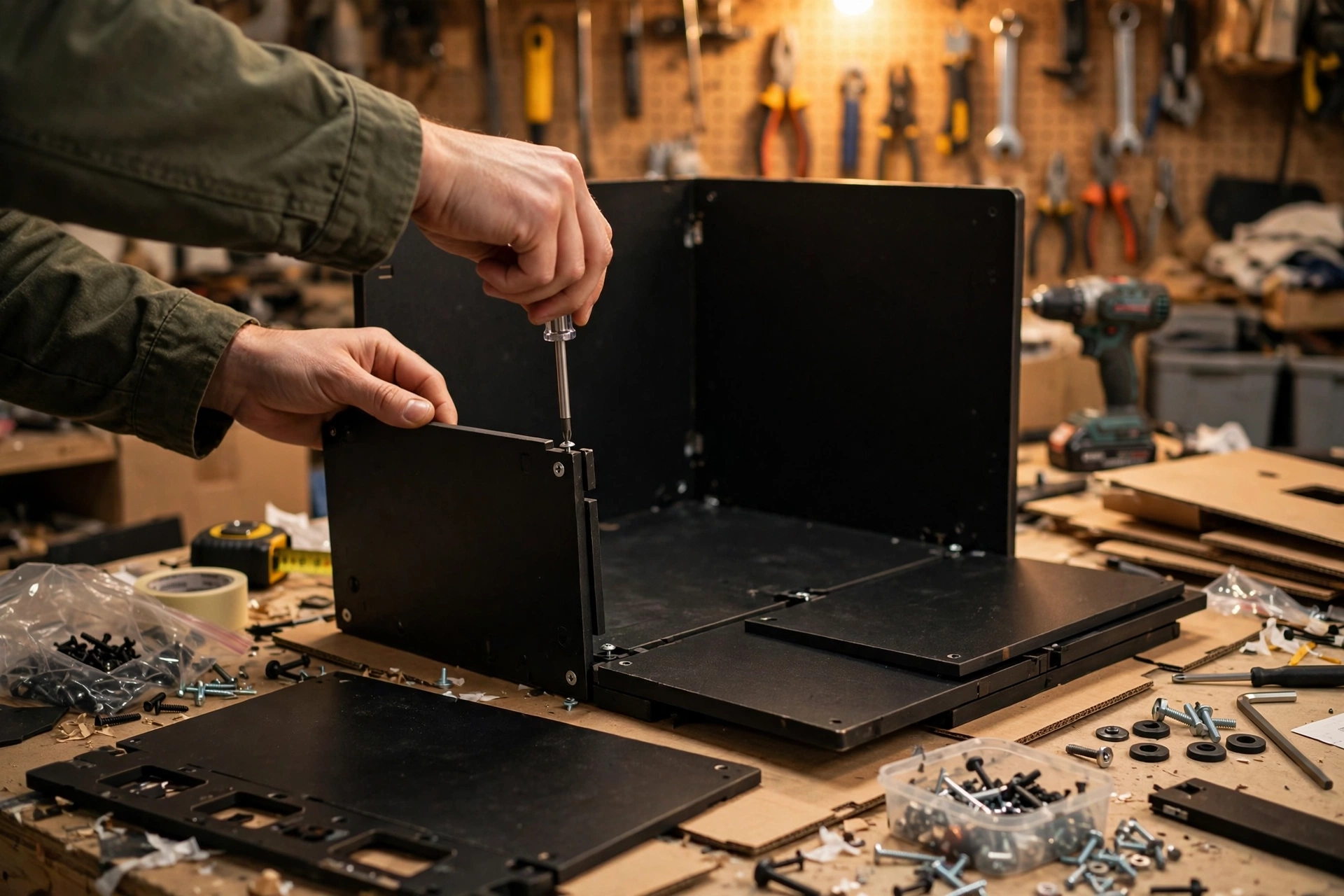
Here’s the honest answer: most builders finish the Xtension Sit Down Arcade Cabinet in a single afternoon. Not a weekend. Not a week of frustrated evenings. One afternoon, assuming you own a screwdriver and can follow along with a numbered video.
Basic tools are all that’s required, no specialist woodworking equipment.
The build itself moves through four clean stages:
- Cabinet body assembly, side panels connect to form the main shell
- Panel attachment, control panel, back panel, and bezel sections go on
- Hardware installation, hinges, t-molding, and fasteners get locked in
- Final fit-check, confirm everything seats flush and sits level
Each stage builds on the last. Nothing happens simultaneously. There’s no moment where you need three hands.
The most common first-timer anxiety is “what if I put something on backwards?” Precision cuts answer that for you. Panels are designed to fit one way cleanly, and the wrong orientation makes that obvious immediately. Errors announce themselves before they become permanent.
The YouTube playlist referenced earlier covers every stage.
What You’ll Need to Source Separately Before Playing Your First Game
Once your cabinet is assembled, the fun shopping list begins. The Xtension kit gives you the shell; everything below turns it into a playable machine.
Monitor: Confirm the monitor size range with Rec Room Masters before ordering, as it varies by cabinet model. A standard 16:9 or 4:3 panel works depending on your game library preference. Confirm mounting hole patterns match the cabinet’s built-in monitor brackets before ordering.
Control board and software: This is the brain of the whole operation. A Raspberry Pi running RetroPie or Batocera is the most popular budget-friendly route. If you prefer a more plug-and-play approach, dedicated plug-and-play arcade boards are another option worth researching.
Controls: Buttons, joysticks, and wiring are where most builders lose an afternoon down a rabbit hole. The shortcut worth knowing: Rec Room Masters’ fully assembled controllers drop directly into the cabinet without any soldering or individual component sourcing. That alone saves a meaningful chunk of build time.
Marquee and side art: This is where your machine gets its personality. Whether you go full retro with classic arcade art or design something custom, standard vinyl prints sized to the cabinet’s marquee and side panel dimensions are widely available from print shops across Canada.
Power bar and cable management: Not glamorous, but essential. A quality surge-protected power bar handles your monitor, board, and lighting in one tidy connection. Plan your cable routing before the final panel goes on; it is much easier than fishing cables out afterward.
Ordering a DIY Arcade Game Cabinet From Canada: What to Know Before You Buy
Now that you’ve sorted your components list, there’s one more layer to think through before you hit “order”: getting the cabinet across the border and into your home.
Flat-pack makes cross-border shipping dramatically more practical. A fully assembled arcade cabinet ships as a massive freight item with dimensional weight charges that can rival the product cost. A flat-pack kit compresses that footprint considerably, which typically means more manageable shipping rates to Canadian addresses.
Budget for duties and customs fees. Importing goods from the USA means potential charges at the border, and the CBSA’s duty and tax estimator can give you a rough baseline before you buy. Final amounts vary, so treat any estimate as a planning figure rather than a guarantee. When reviewing a retailer’s shipping terms, look specifically for clarity on who handles customs paperwork and whether duties are prepaid or collected at delivery.
Reputation matters more than price when buying cross-border. The 4 Player DIY Arcade Cabinet is a good example of a well-engineered kit that ships as a manageable flat-pack, not a freight nightmare. A reputable manufacturer means real customer service, consistent quality control, and a return process that doesn’t involve mailing a warped panel to a warehouse on the other side of the planet.
Which Xtension Cabinet Kit Is Right for Your Setup?

Once you’ve decided a quality flat-pack kit is the right call, the next question is which cabinet format actually fits your space and how you play.
Xtension cabinets are available in multiple formats, which at the time of writing have included sit-down, stand-up, cocktail, and multi-configuration options, confirm the current lineup at recroommasters.com.
- Sit-down: Great for longer sessions, smaller footprints, and setups where comfortable seating matters. Ideal if your game room doubles as a chill space.
- Stand-up: The classic upright arcade feel. Works well against a wall and suits players who prefer standing while they fight, race, or shoot.
- Cocktail: A table-style cabinet where players sit across from each other. Perfect for two-player games and tighter rooms where a full upright isn’t practical.
- Multi-configuration: Built for flexibility, accommodating a broader range of game types and control layouts in a single cabinet.
To find your match, think through four things: how much floor space you’re working with, whether you prefer sitting or standing, how many players will be at the controls simultaneously, and what games you’re planning to run. A solo retro-gaming enthusiast and a household of competitive fighters have very different needs.
The good news is that no matter which format you choose, you’re getting the same precision-cut, flat-pack build quality and the same straightforward assembly experience. The standard doesn’t change across the lineup.
On the controls side, Rec Room Masters offers fully assembled sit-down pedestal controllers, check with Rec Room Masters on controller compatibility for your chosen format.
Browse the full lineup at recroommasters.com to see which format fits your setup best.
Build Confidently: Your Xtension Cabinet Is Closer Than You Think
Once you’ve picked your cabinet format, there’s really just one thing left to do: order it and build it.
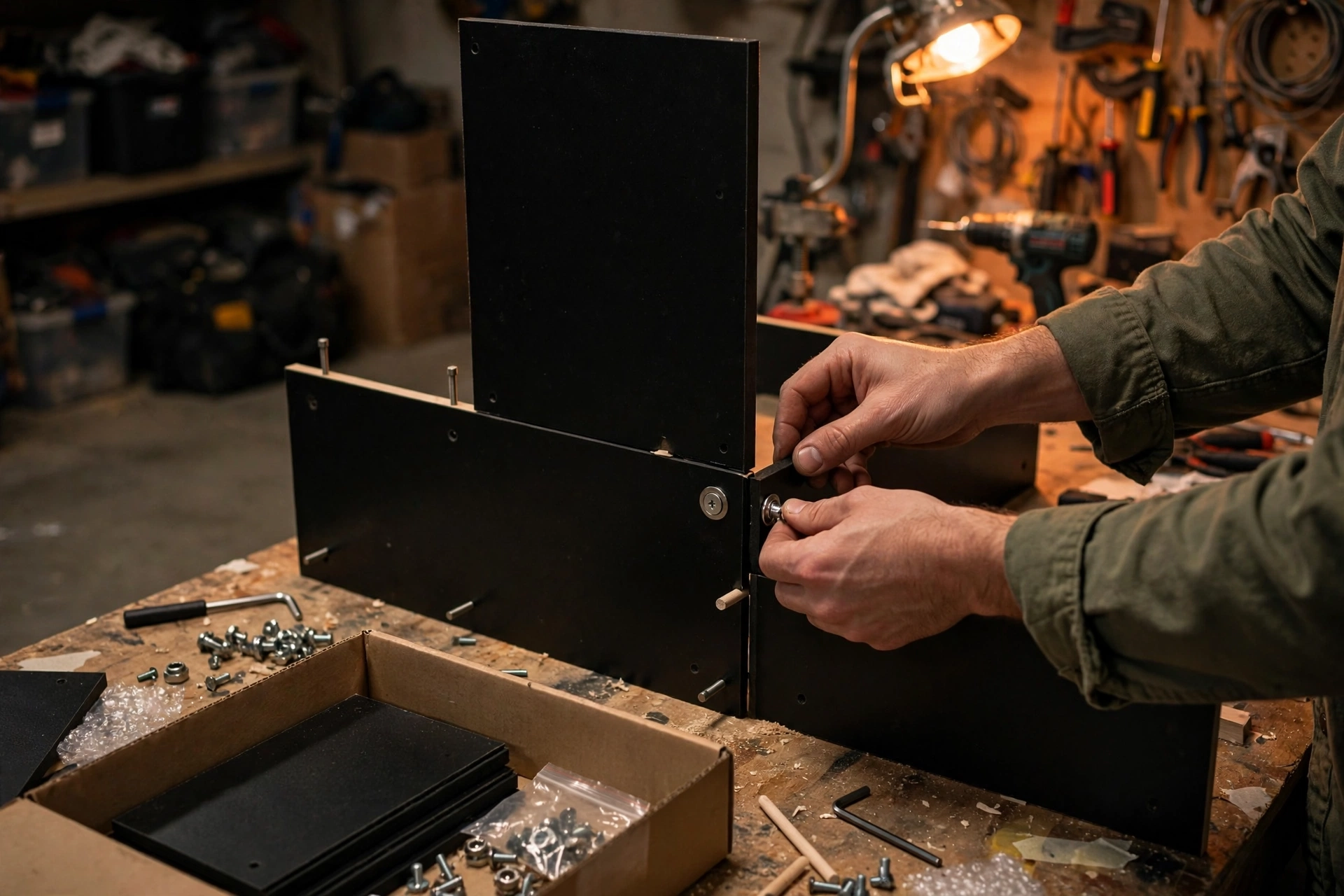
A quality DIY arcade cabinet kit is not a weekend nightmare or a project that demands a workshop full of tools. The Xtension cabinet is a precision-manufactured flat-pack built by a U.S.-based team, designed to go together cleanly in a single afternoon with a screwdriver and a bit of patience. That’s it.
As covered above, U.S.-based manufacturing and tight tolerances are what separate a kit that assembles cleanly from one that fights you. You know what to source separately, monitor, controls, and artwork, and there are no surprises in the box. Step-by-step assembly video playlists back up the build, so you’re never left guessing at a critical step.
When you’re ready to browse the full lineup and choose your cabinet, head to recroommasters.com. The build experience, the quality, and the support are all there waiting.
Your future arcade cabinet is a flat-pack and one afternoon away. Go build something genuinely fun.
Conclusion
Building your own arcade cabinet does not have to be complicated, expensive, or stressful. The path forward is clear: source your monitor, controls, and artwork separately, pick the cabinet format that fits your space, and order with confidence from recroommasters.com.
You are not buying a mystery box or a weekend of frustration. You are buying a clean, well-engineered project with a genuinely satisfying finish line, and a machine that will still be standing, and still be yours, long after the first game.
The cabinet you have been thinking about building is closer than it seems. Head to recroommasters.com, choose your kit, and go make something worth playing.
