

RecRoomMasters
2-Player vs. 4-Player Arcade Controller: Pick the Right Xtension
Sep
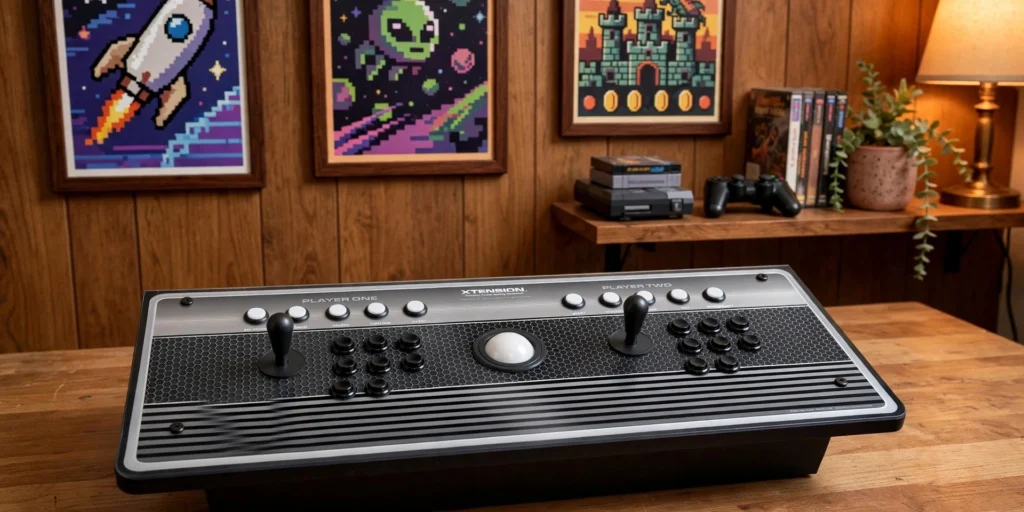
You already know you want an arcade controller. The buttons, the joystick, the whole setup that makes retro gaming feel like the real thing. But here is where a lot of people get stuck: should you go with a 2-player or a 4-player model?
It is a fair question, and the answer is not as simple as “more players equals more fun.” The right pick comes down to four practical things: your game library, how many people typically play with you, how much space you are working with, and which platforms you play on.
This guide walks you through both of Xtension’s fully assembled, plug-and-play arcade controllers so you can make that call with confidence. You will learn what sets each model apart, which gaming genres they each handle best, how they compare side by side, and what platform compatibility looks like before you buy. By the end, you will have a clear answer based on your actual setup, not just a spec sheet. No DIY experience required, no guesswork needed.
What Makes the Xtension Controller Worth Talking About
Most arcade controllers fall into one of two camps: a cheap mass-market gamepad with a joystick glued on, or a DIY project that requires a weekend, a soldering iron, and three YouTube tutorials just to get started.
The Xtension controllers from Rec Room Masters skip both of those headaches entirely.
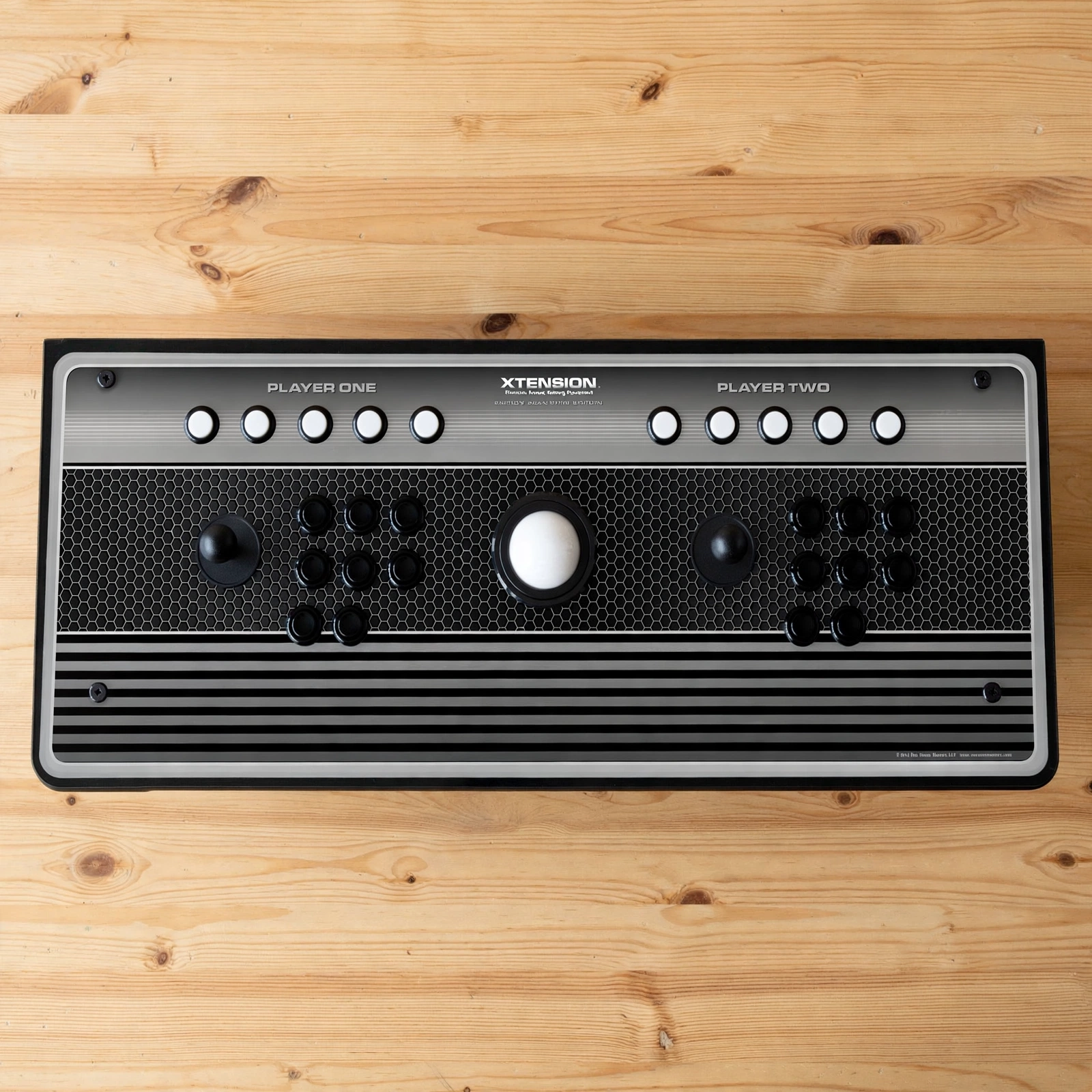
Both the 2-player and 4-player models ship fully assembled and plug-and-play ready. Unbox it, connect it, play. No sourcing individual components, no wiring harnesses, no “I’ll finish building it next Saturday” sitting in your garage for six months. That alone separates them from a significant chunk of the home arcade market.
They’re also built with arcade-grade parts, which matters more than it sounds. Full-size joysticks, proper arcade buttons, and the kind of panel layout you remember from the cabinet at your neighborhood pizza place, not the miniaturized, plasticky approximation you find on mass-market controllers crowding the shelves.
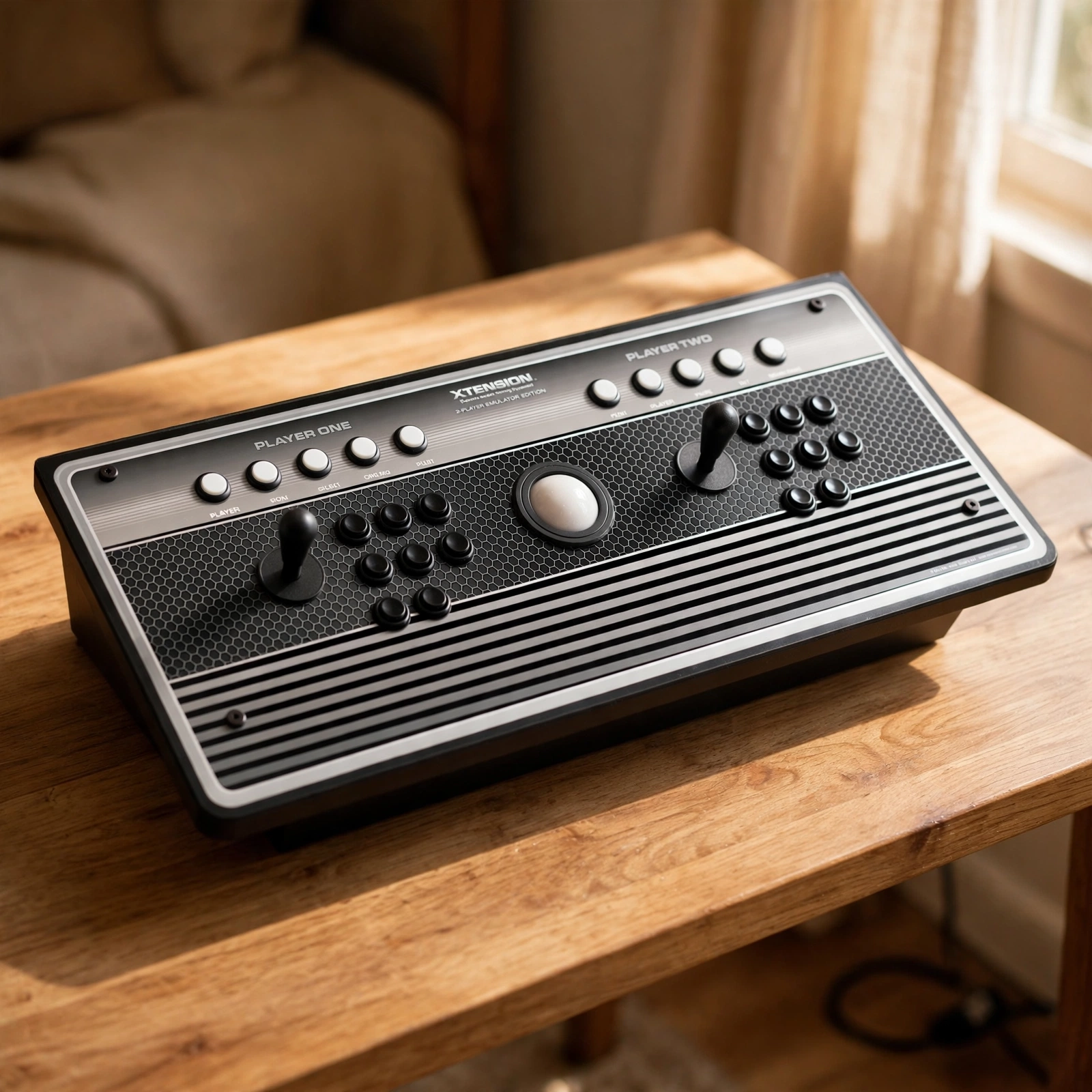
The Xtension 2-player model is a strong example of what this lineup delivers: a controller built for people who want the arcade experience, not the engineering project that usually comes before it.
Both models share this same DNA, and that’s exactly why comparing them gets interesting. When two products are built to the same standard, the decision stops being about quality and starts being about fit: your games, your space, and how many people are playing. That’s the comparison worth making.
The Four Variables That Actually Decide This
Now that you know what these controllers share, the real question is which one belongs in your setup. That comes down to four things.
Genre is the biggest filter. Fighting games are built for 1-on-1 play; beat-em-ups are designed for groups of three or four. The controller you need is basically baked into the games you love.
Your actual player count beats the theoretical max every time. A 4-player panel in a two-person household means two unused control stations quietly judging you from both ends. Be honest about who’s regularly picking up a joystick in your home, not just who might show up on a holiday weekend.
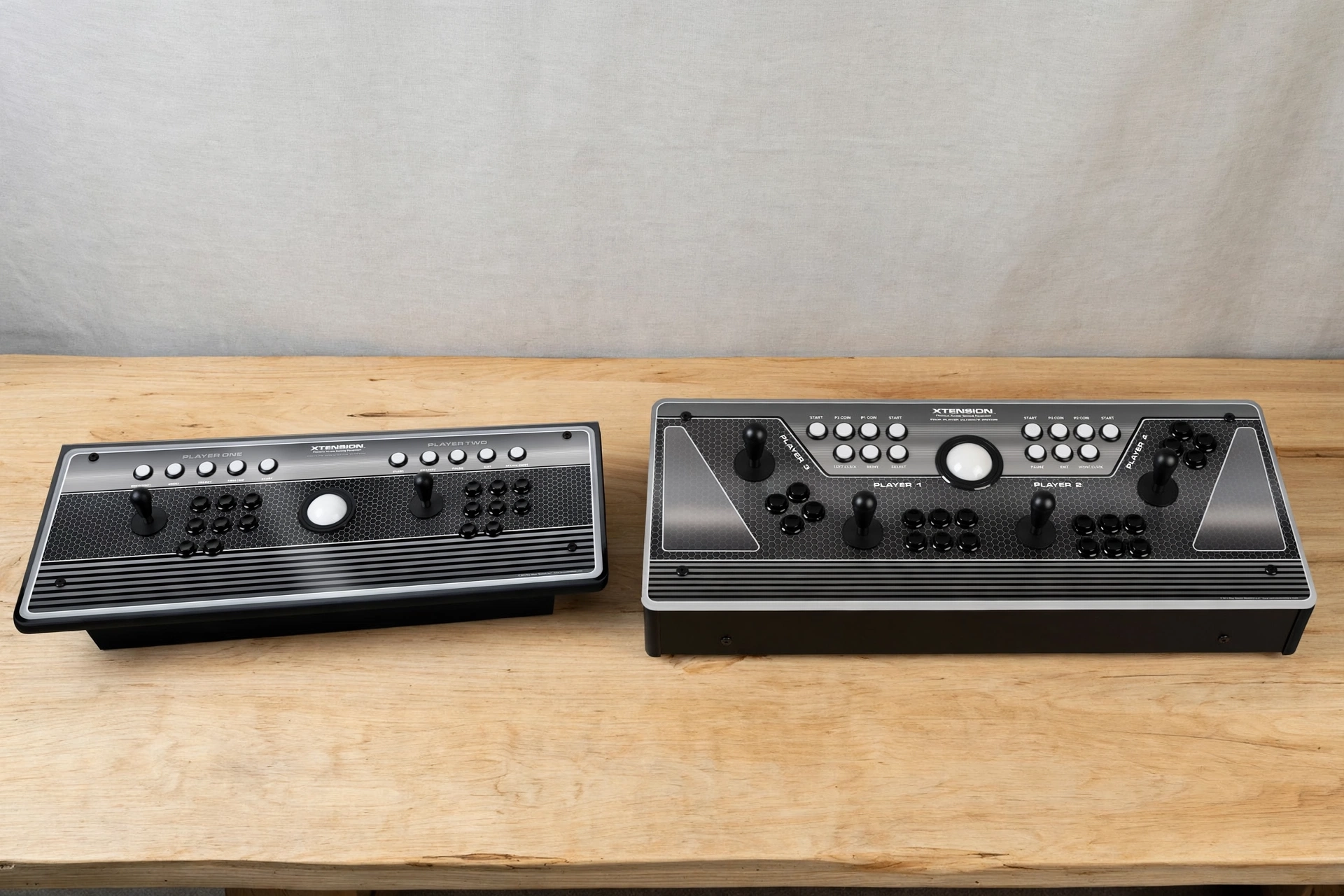
Space is where most people get caught off guard. The measurement that matters is control deck width, not cabinet height or overall footprint. A 4-player setup stretches significantly wider than a 2-player panel, and it needs clearance on both sides. Measure your desk, table, or cabinet bay before you fall in love with the Xtension 4 Player Arcade Controller.
How you entertain changes the value equation. Couples who play three nights a week extract full value from a focused 2-player setup. Families who host occasional game nights get far more mileage from four-player co-op chaos.
The 2-Player Arcade Controller: Built for Focused, Competitive Play
If your game library leans toward head-to-head fighters, the 2-player Xtension is where the variables from the previous section point you.
The panel layout is purpose-built for exactly that. Button spacing and control width are sized for two players sitting side by side without crowding, each with a clean, dedicated zone. In fighting games, where a missed input can cost you a round, having a focused control surface matters. Less clutter around your hands means fewer accidental presses and cleaner execution on the inputs that count.
Who this fits: couples, roommates, or solo players who pull in a friend for a fighting game or a Neo Geo classics session. If two people are your regular player count, the 2-player model gives you everything you need and nothing you don’t. The Xtension 2-Player Pro Arcade Controller is compatible across a wide range of platforms — check current specs at recroommasters.com.
The footprint is a genuine advantage. A narrower control deck fits a corner desk, a smaller entertainment center, or a cabinet bay without requiring you to rearrange the room. If your space is already figured out, the 2-player panel slides in cleanly.
Genre fit extends beyond pure fighters, too. Run-and-gun titles and classic 2-player co-op arcade games play just as naturally on this configuration. If that describes your library, this controller matches your actual play patterns rather than a theoretical four-player scenario that never materializes.
For players new to arcade controls, there’s also a comfort factor. A focused two-player panel is approachable. It doesn’t look like a flight deck, and that makes the learning curve friendlier on day one.
The 4-Player Arcade Controller: Built for the Room Centerpiece Moment
Now flip the scenario entirely. If your game library is stacked with beat-em-ups, the 4-player Xtension controller isn’t an upgrade, it’s the only version that actually works.
Classic 4-player arcade titles were built from the ground up for simultaneous group play. Running them on a 2-player panel means half the gang is watching from the couch. That’s not co-op; that’s a spectator sport nobody signed up for.
This is the controller for households that host. Family game nights, holiday gatherings, a random Tuesday when three friends show up with nothing planned, the 4-player setup answers all of those situations with a simple “grab a joystick.” No waiting, no taking turns, just four players punching through waves of enemies the way the original designers intended.
The wider control deck does demand a dedicated footprint. But here’s the thing: that physical presence works in your favor socially. It becomes the centerpiece of a game room the same way a 4 player DIY arcade cabinet does, something people notice and want to interact with the moment they walk in.
Beat-em-ups and co-op brawlers represent an enormous chunk of classic arcade history, and the 4-player format is genuinely the only way to experience them as designed. Dedicated communities remain active around 4-player configurations as of 2026, a sign of how seriously enthusiasts take this format.
Families with kids get an especially strong return here. Younger players click with co-op chaos far faster than they do with the precision demands of competitive fighting games. Everybody contributes, everybody wins (or loses together), and nobody feels left out.
2-Player vs. 4-Player Xtension: Side-by-Side Breakdown
Here’s how the two models stack up when you put them side by side.
| Feature | 2-Player Xtension | 4-Player Xtension |
|---|---|---|
| Players supported | 1-2 | Up to 4 |
| Best genre fit | Fighting games, 1-on-1 arcade, 2-player co-op | Beat-em-ups, 4-player brawlers, party arcade |
| Physical footprint | Compact, relocatable | Wide; needs a dedicated, measured spot |
| Assembly required | None, ships fully assembled | None, ships fully assembled |
| Best household fit | Couples, solo players, roommates | Families, frequent hosts, 3-4 regular players |
Control deck width is the number that matters most. Before you commit to the 4-player panel, measure your actual play zone, including standing room on both sides. Not just the surface it sits on. Check the product page for exact control deck dimensions before you commit.
Value-per-player is where households diverge. A two-person home gets full use out of every inch of the 2-player panel. A family of four, or anyone who regularly asks “want to play?” to more than one person, will actually use the extra real estate on the 4-player. An underused controller is an expensive shelf decoration, so honest player-count math matters before you buy.
Platform and Compatibility: What to Know Before You Buy
Now that you’ve sized up the two panels against each other, there’s one more layer worth checking before you hit “buy”: whether the controller actually talks to your setup.
The good news is that both Xtension controllers are built for one of the most popular home arcade configurations — a PC running MAME or a similar emulation platform. If that describes your setup, you’re in the right place and both models are designed to perform exactly as intended.
A few things worth knowing before you commit:
PC and emulation setups: MAME is the backbone of most home arcade builds, and both controllers are right at home there. If you’re running a dedicated emulation rig, either model slots in cleanly.
4-player firmware and configuration: The 4-player model has seen active discussion in arcade enthusiast communities as recently as 2026, specifically around firmware options and input handling for multi-player setups. If you’re going deep on a four-player build, it’s worth digging into those configuration options to get the most out of it.
Cabinet builders, pay attention: If you’re dropping one of these into a dedicated cabinet bay, the 4-player panel’s wider footprint needs to match your cabinet’s control deck opening. Measure twice before ordering.
Trackball support: The 4-player model offers trackball compatibility, which matters if your library includes titles like Centipede, Marble Madness, or Golden Tee. That’s a meaningful bonus for certain game collections.
Console compatibility: This one shifts over time, so skip the guesswork. Check the current specs directly on the product pages at recroommasters.com for the most accurate information before purchasing.
Four Questions That Lead You Straight to Your Answer
Now that you’ve checked compatibility, one question remains: which controller actually belongs in your setup? Answer these four honestly.
What does your game library look like? Scroll through your roster. If head-to-head fighters dominate, the 2-player is your controller. If co-op brawlers and multi-player classics show up repeatedly, you need four players at the panel, full stop.
How many people play regularly in your home? If three or more people play regularly, or your household hosts game nights, the 4-player earns its footprint.
Have you measured your space? Measure your actual play zone — surface plus standing room — before ordering the wider 4-player panel.
Are you building a game room centerpiece or a focused play station? The 4-player is a social object that anchors a room. The 2-player is a precision tool that serves two players exceptionally well. Those are genuinely different things to own.
The Right Arcade Controller Is the One That Matches Your Setup
Once you’ve answered those four questions, the path forward is pretty clear. Trust your answers.
The best arcade controller isn’t the flashiest one or the biggest one on the page. It’s the one that actually fits how you play, who you play with, and where it’s going to live.
The Xtension 2 Player Arcade Controller is the right call for fighting game households, tighter spaces, and anyone who wants a precise, dedicated head-to-head setup. The 4-player model is built for beat-em-up fans, families, and hosts who want the controller to be the centerpiece of the room rather than something squeezed into it.
Neither choice is the wrong one in the right situation. Both controllers are ready to use the moment they arrive — visit recroommasters.com to choose between them.
Conclusion
Choosing between the Xtension 2-Player and 4-Player arcade controller comes down to four things: your space, your games, your players, and your goals.
Head to recroommasters.com to compare both Xtension controllers side by side and place your order with confidence. Your game room upgrade is one decision away.
